
The Future of Electronics Manufacturing in 2026
Key Takeaways
- AI and machine learning are transforming quality inspection and production optimization.
- Reshoring and near-shoring trends are reshaping global supply chains.
- Sustainability requirements are driving new material and process choices.
- Advanced packaging technologies are enabling next-generation product designs.
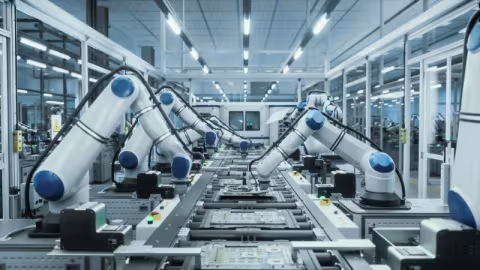
Electronics manufacturing is undergoing its most significant transformation in decades. Driven by advances in automation, artificial intelligence, changing geopolitical dynamics, and increasing sustainability requirements, the industry looks markedly different from just a few years ago.
AI-Powered Quality and Process Control
Artificial intelligence is moving from pilot projects into mainstream production. AI-driven optical inspection systems now detect defects at speeds and accuracies that outperform human inspection, while machine learning algorithms analyze process data in real time to predict and prevent equipment failures before they cause production disruptions.
Reshoring and Supply Chain Regionalization
Supply chain disruptions during the early 2020s accelerated a structural shift toward regional manufacturing. Companies across automotive, medical, and industrial sectors are building or expanding manufacturing capacity in North America and Europe to reduce dependence on distant supply chains and improve responsiveness to local markets.
Sustainability and Circular Economy
Environmental regulations and customer demands are pushing manufacturers to reduce energy consumption, minimize waste, and design products for disassembly and recycling. Manufacturers who build sustainability into their operations are increasingly preferred by brands seeking to meet ESG commitments.
Advanced Packaging and Miniaturization
The demand for smaller, more powerful electronic products continues to drive innovation in packaging technologies. 3D packaging, system-in-package (SiP), and heterogeneous integration allow more functionality in smaller footprints, opening new possibilities for wearables, medical implants, and edge computing devices.
Workforce and Skills Evolution
As automation handles more repetitive tasks, the skills required of manufacturing workers are shifting toward programming, data analysis, and system oversight. Leading manufacturers are investing heavily in workforce development to ensure employees can work effectively alongside automated systems.
Frequently Asked Questions
1. How is AI changing electronics manufacturing?
AI improves quality inspection accuracy, enables predictive maintenance, and helps optimize production scheduling and yield management.
2. What is driving the reshoring of electronics manufacturing?
Supply chain vulnerabilities exposed during the pandemic, geopolitical tensions, and government incentives are all contributing to increased regional manufacturing investment.
3. What sustainability practices are electronics manufacturers adopting?
Energy-efficient equipment, waste reduction programs, recyclable materials, and product design for end-of-life recovery are among the most common sustainability initiatives.
